
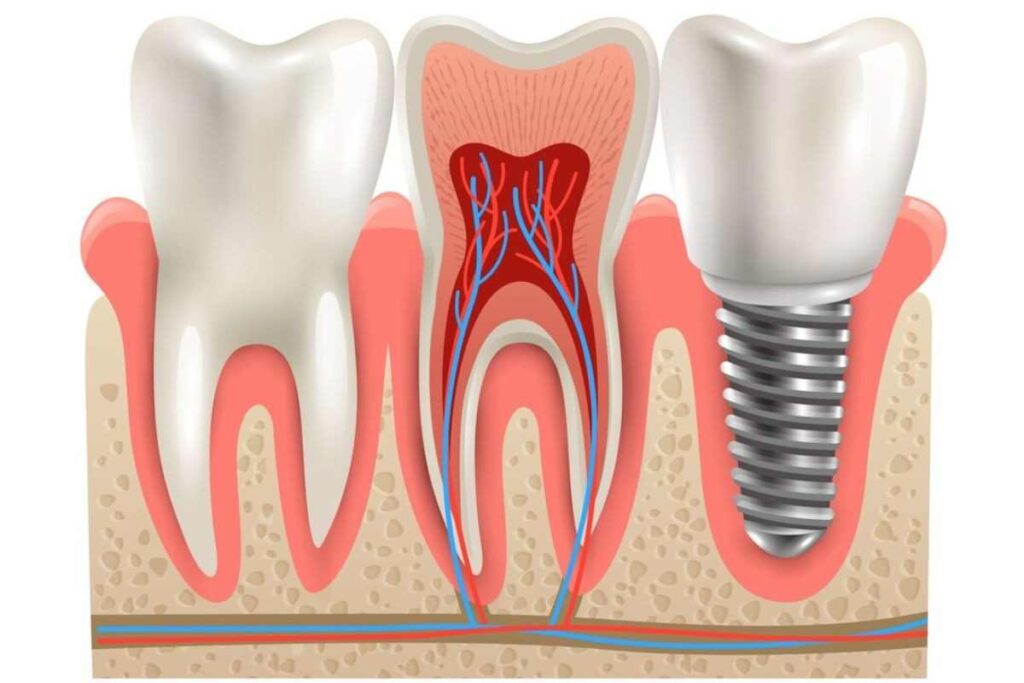
When a tooth is badly damaged or infected, the choice between a root canal vs dental implant can feel confusing. Both treatments can help treat serious tooth problems and restore normal chewing and oral function, but they work in different ways. A root canal treats the inside of the damaged tooth and helps save the natural tooth when possible. A dental implant may be considered when the tooth cannot be saved and needs to be replaced. The right choice depends on your needs, including how much healthy tooth is left, the health of your gums and jawbone, and your overall oral health.
Understanding how each option works can make it easier to discuss the right treatment with a dental professional.
Is a Root Canal Healthier Than an Implant?
In many cases, keeping a natural tooth is preferred when it can be safely restored. A root canal removes infected tissue from inside the tooth while allowing the natural tooth structure to remain in place.
Dental implants near you may be considered when a tooth is too damaged or unhealthy to restore. An implant replaces the missing tooth with an artificial tooth supported by an implant placed in the jaw.
The choice is not simply about which treatment is healthier. It is about which option is appropriate for the specific condition of the tooth.
How Does a Root Canal Save a Natural Tooth?
A root canal treats an infection or serious problem inside a tooth. The damaged tissue is removed, the tooth is cleaned, and the space is sealed. A filling or crown may then be placed to repair and protect the tooth.
A root canal may be suitable when:
- Enough healthy tooth remains.
- The gums and jawbone can support the tooth.
- The infection can be treated.
- The tooth can be repaired after treatment.
- Saving the natural tooth is likely to work well.
Keeping the tooth can help maintain your bite and avoid tooth replacement.
When Is a Dental Implant a Better Option?
Dental implants may be recommended when a tooth cannot be saved or has already been removed. Instead of treating the inside of the natural tooth, an implant replaces the missing tooth from the root level upward.
An implant treatment may involve:
- Removing the damaged tooth, if needed.
- Allowing the area to heal when required.
- Placing the dental implant into the jawbone.
- Allowing time for healing and stability.
- Attaching a replacement tooth to the implant.
The exact timeline varies depending on bone health, healing, and individual treatment needs.
What Does a Dentist Consider Before Choosing?
A dentist in Surrey will usually assess the tooth and surrounding tissues before recommending treatment. Dental X-rays or other imaging may be used to understand the condition of the tooth and jaw.
Factors that may affect the choice include:
- How much healthy tooth is left
- How serious the infection or damage is
- The health of the gums
- The condition of the jawbone
- Where the tooth is located
- Your overall oral health
- Whether the tooth can be repaired after treatment
If the tooth can be repaired and saved, a root canal may be a good option. If it cannot be repaired, replacing the tooth may be considered.
Root Canal vs Dental Implant: Which One Lasts Longer?
The long-term success of either treatment depends on proper care, oral hygiene, regular dental visits, and individual health factors.
A root canal-treated tooth can remain functional for many years when properly restored and maintained. However, the tooth may still be affected by cracks, decay, or other damage.
Implants are designed as a long-term tooth replacement option, but the replacement crown or other restoration may need maintenance or replacement over time. The health of the gums and bone around the implant is also important.
Neither treatment should be viewed as a guaranteed lifelong solution.
Which Option Has a Faster Recovery?
Recovery time can vary significantly between the two options. A root canal usually involves treating the affected tooth and restoring it, while an implant may require several stages and a longer healing period.
A root canal may involve:
- Treatment of the infected tooth
- Short-term tenderness
- Placement of a final restoration
- An implant may involve:
- Tooth removal, when necessary
- Healing after extraction
- Implant placement
- A healing period
- Final restoration
The expected timeline depends on the condition of the tooth and the treatment plan.
Can a Dental Clinic Help Choose the Right Treatment?
A dental clinic near you can provide an examination to determine whether a damaged tooth can be saved or should be replaced. The goal is to choose the option that supports long-term oral health and everyday function.
It is important to avoid choosing based only on cost or treatment time. The condition of the tooth and the health of the surrounding tissues are key factors.
Make an Informed Choice for Your Dental Health!
Deciding whether to save your natural tooth with a root canal or to replace it with an implant depends on the condition of the tooth and nearby structures. With each choice, a professional assessment can help explain the potential benefits, risks, duration, and long-term maintenance.
Book an appointment with Smile 64 Clayton Dental to have your tooth evaluated, discuss your treatment choices, and find an approach suited to your long-term oral health needs.
FAQs
Is a root canal healthier than an implant?
When a natural tooth can be safely saved, preserving it is often preferred. An implant may be more suitable when the tooth cannot be restored.
Is an implant healthier than keeping an infected tooth?
An untreated infected tooth can cause serious problems. If the tooth cannot be successfully treated, removing it and considering replacement may support better oral health.
Can every damaged tooth be treated with a root canal?
No. A tooth needs enough healthy structure and support to be restored successfully.
Does getting an implant mean the natural tooth must be removed?
Not always. An implant is generally considered when a tooth is already missing or cannot be predictably saved.